'The government wants foreign companies to capture the insurance market.'
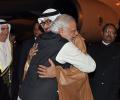
During Al Nahyan's three-day visit, his first to India, the two countries will discuss ways to enhance ties in a range of areas including energy, economy and security and are expected to sign a number of agreements in sectors like oil nuclear energy, IT, aerospace, railways and electronics.

'To represent one's country at the biggest stage is what drives us.' 'My goal is to reach the Olympics. So, Beijing 2022 it is!'

Banks to be permitted to raise long-term funds for lending to infrastructure sector with minimum regulatory pre-emption such as CRR, SLR and Priority Sector Lending.

There is a case for analysing the fiscal deficit, separately for expenditure and investment.

Walmart-owned Flipkart on Wednesday said it has set up a new fulfilment centre (warehouse) in West Bengal, its second-largest in the state, that will help in creating nearly 3,500 direct jobs. Spread across an area of over 2.2 lakh sq ft, the new facility in Dankuni will cater to the needs of Flipkart and Myntra customers in the region and bolster the e-commerce major's efforts to ramps up supply chain infrastructure in the eastern part of the country. The facility will also help thousands of sellers offer a wider selection and enable faster deliveries of customer orders within the region and neighbouring states while also helping create national market access, according to a statement.

But it is disappointing to note that Sitharaman's third Union Budget continues to promote a few problematic ideas, observes A K Bhattacharya.
Finance Minister Nirmala Sitharaman on Friday hiked tax on petrol and diesel, raised import duty on gold, levied additional surcharge on super rich and brought a tax on high value cash withdrawals as she sought to spur growth with reduction in corporate tax and sops to housing sector, startups and electric vehicles.

Biden's proposal also sets aside USD 20 billion for a national vaccination programme and USD 50 billion to scale up coronavirus testing.
The report cautioned that low capacity utilisation and stressed balance sheets of banks and businesses will prevent a strong investment revival in the short term.

The actual expenditure will only be marginally higher and hence, the multiplier effect will be muted.

'Are all roads in India privatised? Are governments not playing a role in airports or ports? If they (private players) want to set up lines for a specific requirement, I see no reason to object. It will expand the opportunity and passengers will also benefit.'
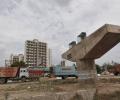

According to the revised plan, promoter Naresh Goyal, his wife Anita Goyal and the directors nominated by the promoter would be asked to step down from the board, and the lenders, as part of the resolution process, will infuse around Rs 1,200 crore into the airline as emergency funding.

Progress on several parameters creates a tipping point situation.

The infra-major going belly up cracked open some major flaws in the system - the most evident being weak corporate governance and how layers of corporate structures could be formed adding to the opaqueness of the group.

Rather than talking endlessly about lost and marginal opportunities, India's climate envoys need to start thinking bigger, says Mihir S Sharma.

The RBI has also been asked to consider displaying this information on its website.

Low oil prices also means effectively transfer of wealth from the producing nations to the consuming nations
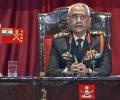
His comments came in the midst of the disengagement process between Indian and Chinese armies in Pangong Tso areas in eastern Ladakh where the two sides have been locked in a nine-month standoff.
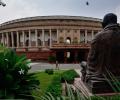
The session started on January 29 and was originally slated to end on April 8 but several members had urged Speaker Om Birla to end the session earlier as they focus on electioneering for the five assemblies.

To attract bidders, the government had decided to hive of around Rs 35,000 crore of the company's debt into a separate subsidiary, leaving around Rs 23,286 crore to be absorbed by the new bidder.

Market regulator also announces measures for mutual funds sector.

'India has benefited from lower oil prices and remains the fastest-growing large economy in the world.'

22 companies won bids for the 31 contracts on offer; 15 were new entrants to the oil and gas business. Three years on, none of them have started production.

The major beneficiaries have been the ministries of roads and highways, railways and power

Income from renting of properties is taxed at a flat rate of 10%.

The minister plans to reinstate the Railways as the backbone of the economy
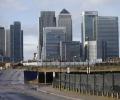
He is the man behind Blackstone's India strategy

The business council aims to give impetus to trade.

The total earnings in Q1 rose 14.54 per cent, while working expenses grew at a measly 4.22 per cent.

The view is that the attention on the national team is fleeting, incidental and dependent on the results they produce.

Indeed, there were frauds, and the politician-banker-industrialist nexus played a role in the rise of NPAs, but governance issues in Indian banking are far more nuanced and complex, reveals Tamal Bandyopadhyay.

Secretary of State for Foreign Affairs William Hague and Chancellor of the Exchequer George Osbourne, heading the largest business and ministerial delegation ever, arrived in Mumbai, their first port of call, during a two-day visit to the country.

When Nitin Gadkari took charge as Road Transport and Highways Minister in 2014, he had set a target of constructing 40 km a day in two years. But construction at this point is a mere 16 km a day. Megha Manchanda on what ails the road sector.

In 2011, India's share in global nanotechnology research publications had reached six per cent from a mere two per cent in the year 2000, the study found.

'Initially, Gift City was just another real estate project, but all that changed with Modi moving to New Delhi,' notes Tamal Bandyopadhyay.

All banks are eligible for privatisation. A committee of secretaries will decide which banks will be privatised, says Financial Services Secretary Debasish Panda.

Indian Prime Minister Narendra Modi who envisioned Make In India last September was at his eloquent best as he made a fervent plea to global businesses to come Make In India.
Post office savings deposit, recurring deposit accounts and the senior citizen savings scheme account have shown the highest growth in the current financial year.
